
Definition
Iodine is a trace mineral that the body needs in small amounts, but it is essential for normal health.
Purpose
The main purpose of iodine in your body is to help the thyroid gland produce two key hormones, Triiodothyronine (T3) and Thyroxine (T4). These hormones regulate metabolism, heart rate, and body temperature among other things.
Symptoms of deficiency
Iodine deficiencies are relatively common, especially in people who don’t eat a lot of seafood or dairy, and/or people who have traded in their iodized salt for other options like sea salt and Himalayan pink salt. Other people at risk of an iodine deficiency include people who are avoiding salt due to high blood pressure, heart disease, etc. Symptoms of low iodine can include enlarged thyroid, fatigue, feeling cold, dry skin and hair thinning.
Sources of iodine
Iodine is found in eggs, dairy products, seafood (cod, shrimp, tuna), seaweed, and some plants foods (potato with skin, prunes). You can also find iodine in fortified products such as iodized salt. Note that many processed foods do not use iodized salt. Your body does not produce iodine.
When/How to take iodine supplements
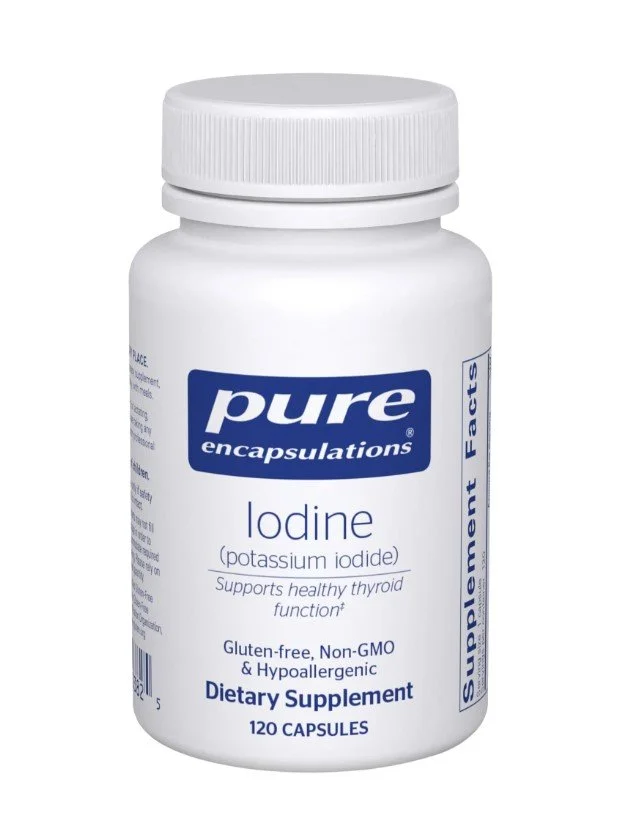
If you are not eating enough iodine-containing food, then you may want to consult with your doctor and consider supplementing with a high-quality iodine. You can also order your own lab work to test your blood levels. Most people supplement with a pill form of potassium iodide. Others use liquid iodine drops. Iodine supplements can be taken at any time of day, but it's often recommended to take them with food or a full glass of water to reduce the risk of stomach upset.
Iodine
(revised march 9, 2026)
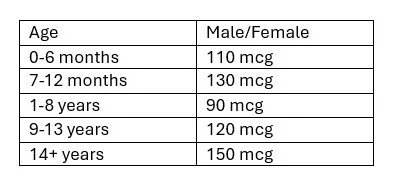
USDA Recommended Daily Allowances (RDA):
Notes
If you suspect you may have low iodine, we recommend getting your blood tested for iodine levels. Many doctors and labs will state a range of 52-109 mcg/L as a proper range. Ask your doctor to test it. If they won’t, you can have a private lab run it for you (click >>HERE<<).
Ref:
https://ods.od.nih.gov/pdf/factsheets/iodine-consumer.pdf
https://www.webmd.com/vitamins-and-supplements/ss/slideshow-get-enough-iodine
https://www.nhs.uk/conditions/vitamins-and-minerals/iodine/
https://www.restartmed.com/iodine-testing/
https://ods.od.nih.gov/factsheets/Iodine-HealthProfessional/
https://www.miduty.in/blogs/health/effective-ways-to-take-iodine-supplements-for-thyroid