
Definition
Vitamin D is a necessary fat-soluble nutrient needed by your body for several reasons. Vitamin D is not found in many food products unless added.
Purpose
Vitamin D is used by your body for development and continued health of your bones, along with roles affecting your nervous system and immune system among other things.
Symptoms of deficiency
Vitamin D deficiencies are common, with some estimates showing 50% of us have insufficient levels. Low levels of Vitamin D have been linked to cancer, cognitive decline, and rickets. Low Vitamin D can also reduce your body’s ability to absorb calcium and phosphorus which can lead to hypocalcemia and subsequently hyperparathyroidism. Your body can react to low calcium by pulling calcium from your bones, leading to osteomalacia. Other symptoms can include fatigue, bone pain, muscle cramps, and mood changes. Deficiencies can be caused by not getting enough sun, not consuming the correct foods, from medical conditions (celiac disease, obesity, kidney disease), and by some medications. It has also been noted that many cancer patients have low levels of Vitamin D, but the exact relationship has not been necessarily established.
Sources of Vitamin D
Vitamin D is not found in many foods unless they are fortified (such as fortified milk and orange juice). But you can find it in fatty fish (salmon and sardines), mushrooms, and cod liver oil. Your body also makes Vitamin D from exposure to sun.
If you need to supplement, we recommend Vitamin D3 along with K2.
When/How to take Vitamin D supplements
There are mixed studies on the best timing, but we recommend taking Vitamin D supplements in the morning. Vitamin D is best absorbed with fats and oils, so take it with a meal. We also recommend a high-quality D3. Vitamin D3 can raise your Vitamin D levels higher and longer than Vitamin D2. Vitamin D can interact with your prescriptions. As always, discuss it with your doctor.
D (Vitamin D)
(revised January 30, 2026)
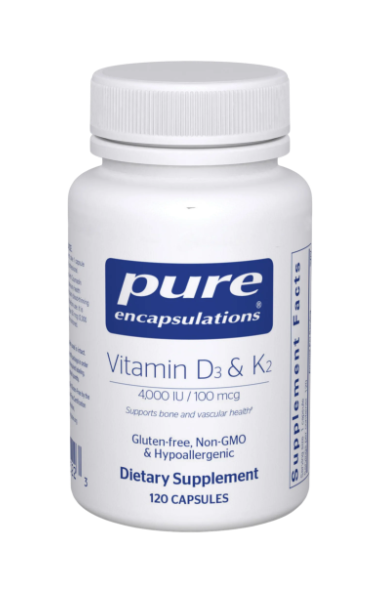
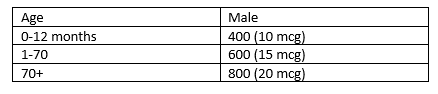
USDA Recommended Daily Allowances (RDA) (IU)*:
Notes
We recommend getting your blood tested for Vitamin D levels. Many doctors and labs will state that anything below 20 ng/mL is too low, and that anything above 50 ng/mL can be toxic. Many nutritionists want to see it above 50 ng/mL. For me, I want to keep my levels between 40 and 60 ng/mL. Ask your doctor to test it. If they won’t, you can have a private lab run it for you (click >>HERE<<).